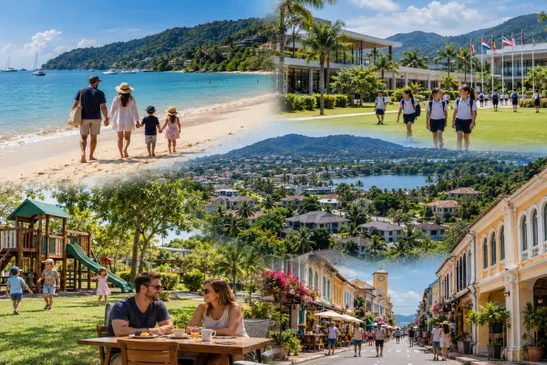
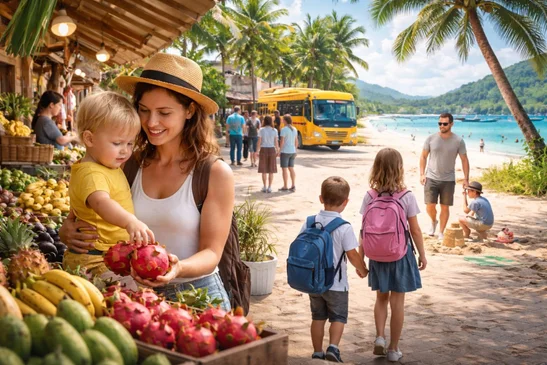
Phuket has become an increasingly popular place for expats to relocate to. While the statistics are unclear, it has grown from a laid-back holiday island of a few hundred thousand people to a place that some estimate is home to as many as two million. Growing pains are inevitable, but the collective impact of expats being mindful of their role in the community can be significant. Whether you’re a long-term resident, business owner, or newcomer, being a responsible member of the Phuket community means contributing positively to the island’s environment, economy, and social fabric.
First and foremost, remember that you are a guest in Phuket. In Thailand, you’re either Thai or a foreigner, which means you represent the expat community whether you want to or not. As a guest, you’ll be happier here if you adapt to the way things are rather than imposing your own expectations. It’s a different culture with different social norms, and your experience living here will be far more rewarding if you can accept that. Phuket is a true melting pot—sea gypsies, Thais, Chinese/Thai, and expats from all around the globe. That means a wide spectrum of cultures, attitudes, social norms, and belief systems, and everyone has to find ways to coexist. Patience, understanding, and respect are essential.
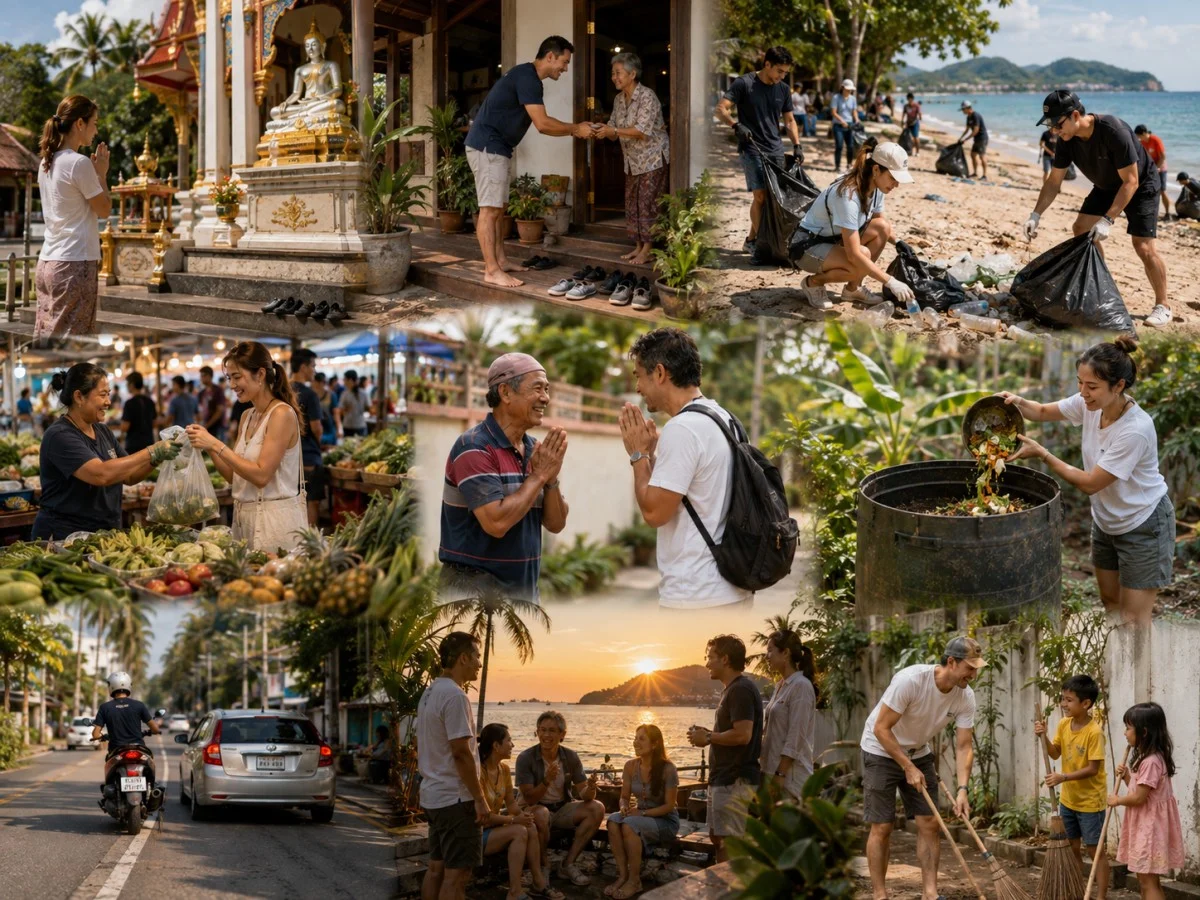
Simple actions such as dressing appropriately at temples, removing shoes before entering homes or sacred spaces, and showing respect to elders go a long way. Learning at least a few basic Thai phrases is another great way to foster goodwill and show appreciation.
Environmental responsibility is another increasingly important issue for all Phuket residents. There has been a growing focus on garbage disposal and waste-management issues on the island, and the situation is reaching a critical point. Regardless of where the blame lies for current problems, the daily waste sent to the incinerator is far beyond capacity, and the most immediate, impactful solution is for all of us to reduce our output. You don’t have to be an environmental activist to decline plastic bags, carry your own reusable coffee/drink cup, or cut back on ordering food delivery. If you need some motivation, stop by the landfill in Saphan Hin for a glimpse of how individual decisions affect the island. Dealing with wet waste like food scraps is a major challenge, and residents are encouraged to compost at home whenever possible.
Supporting the local economy is another great way to be a responsible community member. While more and more international chains pop up across the island, choosing to shop at local markets, dine at family-owned restaurants, and use local services helps keep money circulating within the community and can have far-reaching positive impacts.
Last but not least, be a good neighbor. Keeping noise levels down, driving and parking responsibly, and being friendly and helpful all make a difference. Smiling is contagious—and when you’re a good neighbor, you’ll often inspire those around you to be the same.