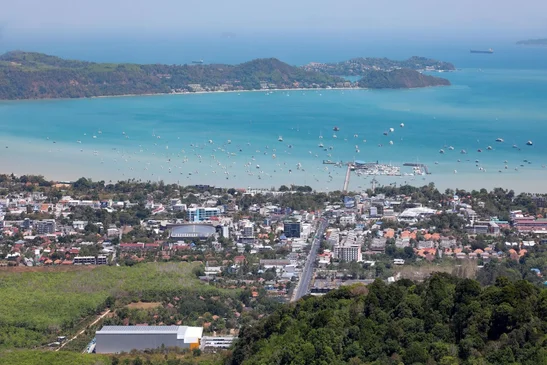
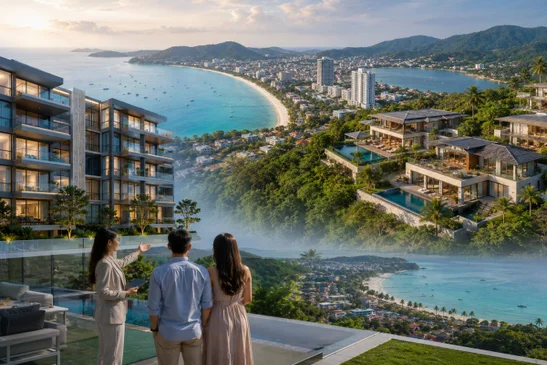
Phuket is currently revising its Comprehensive City Plan, with proposals that could allow taller, higher-density development in designated commercial red zones and medium-density orange zones. The changes are not yet in force.
With Phuket facing pressure from extensive real estate development and a limited supply of flat land, provincial planners and the Department of Public Works and Town and Country Planning are reviewing land-use and building regulations. The proposals aim to concentrate more development in selected urban hubs rather than continue expanding into the island's remaining green spaces.
Overhauling Phuket’s City Plan
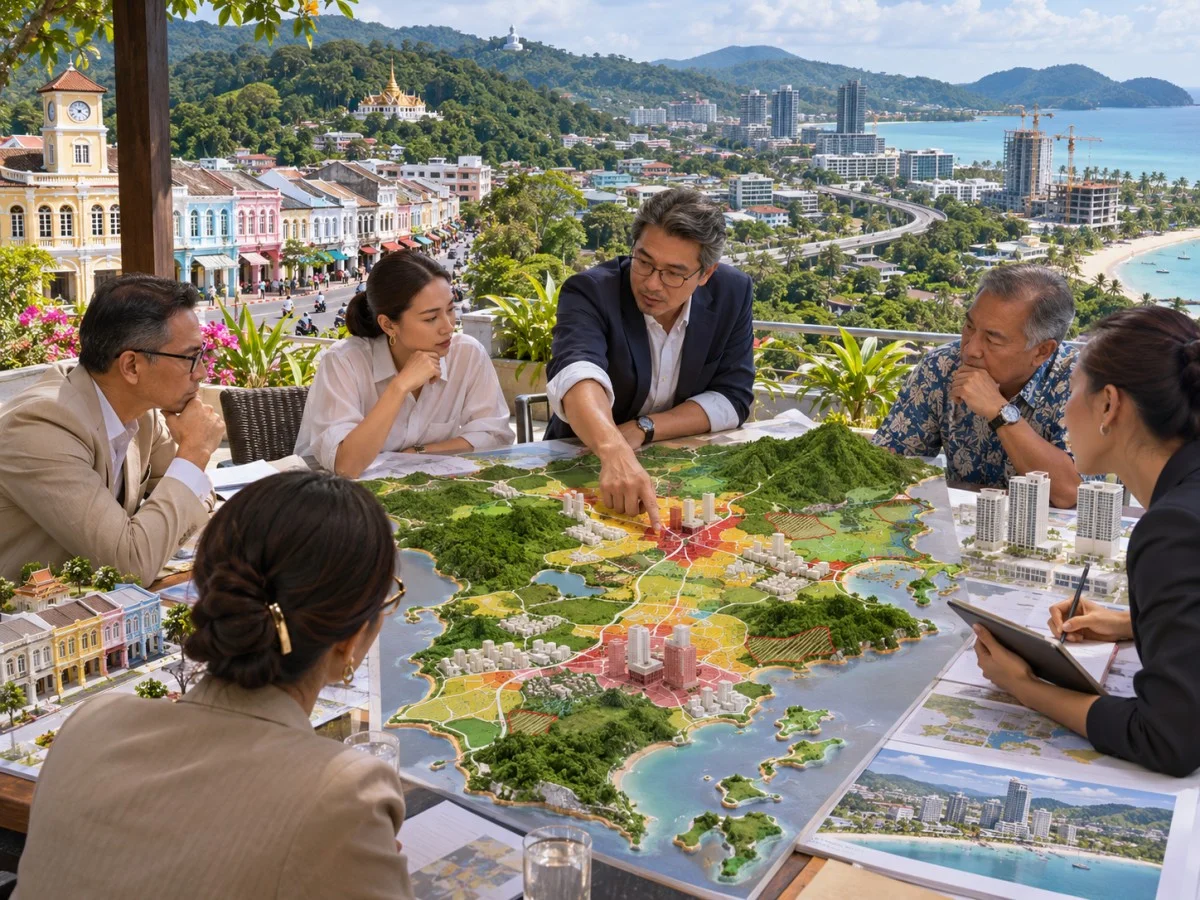
A source from the Phuket Provincial Office of Public Works and Town & Country Planning revealed to Prachachat Turakij that a new comprehensive city plan for Phuket was being drafted. The initiative aims to harmonize local conditions with public and private sector development regarding land use and transportation, ensuring orderly expansion and future growth.
The regulations have been revised following feedback from business operators and public consultations. The Phuket planning office’s August 2026 update said that a planning committee had endorsed the draft and that preparations for a 90-day public notice would follow. The proposed plan has yet to take effect. Implementation is expected in 2027, subject to the remaining procedures.
The draft city plan adjusts the Floor Area Ratio (FAR), the ratio of total building floor area to land area, alongside height controls, with limits varying by location. According to the draft FAR figures reported in July, zones suitable for development may permit a maximum FAR of 7–8 times the land area, whereas areas characterized by natural landscapes or cultural heritage, such as Old Phuket Town and its Sino-Portuguese districts, could be restricted to 2–3 times. However, the Phuket Real Estate Association warned that new FAR limits could reduce permissible floor area by 15–40% on some plots, even where taller buildings are proposed.
Proposed Building Height Changes in Red, Orange and Yellow Zones
In a July interview with Prachachat Turakij, Methapong Upatisring, president of the Phuket Real Estate Association, forecast that the revised city plan would be announced in the fourth quarter of 2027. The interview described proposed heights of 45 to 60 metres (about 15 to 20 storeys) in some red zones.
If approved, the changes could create development opportunities for real estate operators, hoteliers and others, beyond restrictions that currently limit most buildings in Phuket to around 23 metres, or seven storeys. Areas being discussed for red-zone reclassification include Patong and selected parts of Thalang District and Phuket Town. The changes could support new condominium development, although not every plot would qualify for the maximum height.
Red Zones (Commercial & High-Density): A November analysis of the draft lists proposed limits of up to 60 metres in parts of Patong and Phuket Town, and up to 75 metres in a proposed commercial zone in Thep Krasattri, Thalang. The final zoning map will determine which individual plots are affected.
Orange Zones (Medium-Density): The Phuket News reported a proposed limit of up to 45 metres in selected orange zones in September. The November analysis lists 30 metres for both orange-zone categories. The applicable limit will depend on the final plan and other building controls.
Yellow Zones (Low-Density Residential): The proposed changes retain a 23-metre height limit while introducing or maintaining stricter controls on development intensity in some locations.
Existing Hillside and High-Altitude Restrictions
Phuket’s 2024 environmental protection notification governs construction at higher elevations. It generally restricts development at elevations more than 80 metres above mean sea level.
Above 80 Metres: Construction is generally restricted. One exception may apply to land between 80 and 140 metres above mean sea level that was privately owned or lawfully possessed before the 2017 environmental notification took effect. Eligibility must be checked for each plot.
Above 140 Metres: The limited private-building exception does not apply to land higher than 140 metres above mean sea level.
Strict Limitations: For the relevant narrow exception, buildings are generally limited to a detached house or single building no more than 6 metres high with a maximum 90-square-metre ground footprint. At least 70% of the land must remain open space, and at least half of that open area must be maintained as green space. These restrictions do not amount to permission for large resorts or multi-villa developments.
Slope Restrictions: Separate controls apply to steep plots. The applicable slope thresholds are expressed as percentage gradients, not degrees, and permitted construction depends on the site's zone and other legal conditions. Buyers should not assume that land is buildable based only on elevation.
Timeline and Investment Outlook
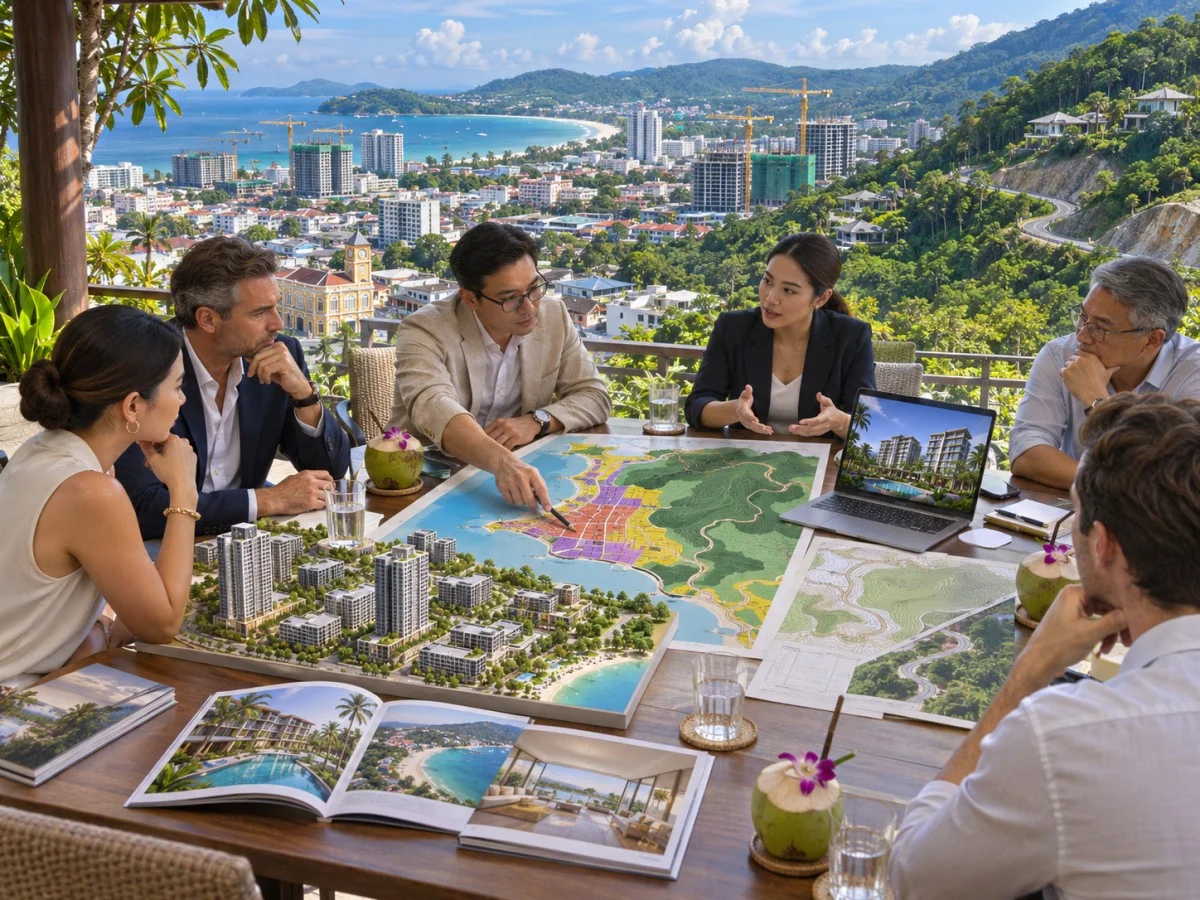
The new Phuket Comprehensive City Plan has undergone public consultations, including an August 2026 public hearing, as officials balance infrastructure capacity, environmental preservation and developer demands. Following committee endorsement of the draft, a 90-day public-notice stage is expected before the remaining steps towards enactment.
The industry forecast puts publication of the plan in the fourth quarter of 2027, but the timetable and final requirements are not guaranteed. Real estate industry representatives expect the proposals to create investment opportunities in selected areas, while noting that some plots could face tighter development controls.
Potential for Condominium and High-Rise Development: Increased height limits in selected red and orange zones could make some urban condominium projects more feasible. However, FAR limits, setbacks, road-width requirements and the cost of replacing existing buildings may restrict what can actually be developed.
Shift in Villa and Land Dynamics: In west-coast and inland areas such as Bang Tao, Cherng Talay, Kamala, Rawai and Nai Harn, the limited supply of beachfront and flat land remains an important development consideration. Some developers are looking farther inland, but hillside restrictions continue to limit what can legally be built on elevated plots.
Market Conditions Matter: Greater permission to build does not automatically mean stronger demand or higher returns. Krungsri Research reported that Phuket residential sales fell by 61.1% in 2025, while unsold inventory increased to 14,008 units. Future supply, buyer demand and rental competition will remain important considerations.
Zoning Verification Is Critical: Before committing to a property or plot of land, buyers should confirm the current zoning, any proposed changes, road-width and setback rules, and the relevant building permits with the local Department of Public Works and Town and Country Planning. Hillside buyers should also verify elevation, slope and environmental restrictions.
What the Proposed Changes Could Mean for Property Buyers
For buyers considering condominiums or homes in areas proposed for higher-density development, taller future buildings could affect views, privacy, traffic and neighbourhood character. However, a higher zone limit does not mean every nearby plot will be eligible for the tallest building.
For investors, additional development capacity could increase the supply of competing properties over time. Rental yields, resale values and capital appreciation will still depend on location, demand and the characteristics of each project—not on the proposed zoning changes alone.
Prospective buyers should compare the zoning rules currently in force with the proposed plan and obtain independent legal and technical checks before relying on any future development potential.