Unfortunately, accidents in Phuket are all too common. Many variables contribute to their occurrence, whether it’s unclearly marked roads, ensuing chaos from many drivers ignoring traffic laws, tourists unfamiliar with the local driving style, or inclement weather. Regardless of the cause, the hope is that a mishap results in nothing worse than a damaged vehicle and an inconvenience. Let’s hope you’re fortunate enough to not end up in this situation, but having an idea of how to deal with the situation may provide some relief should the need arise
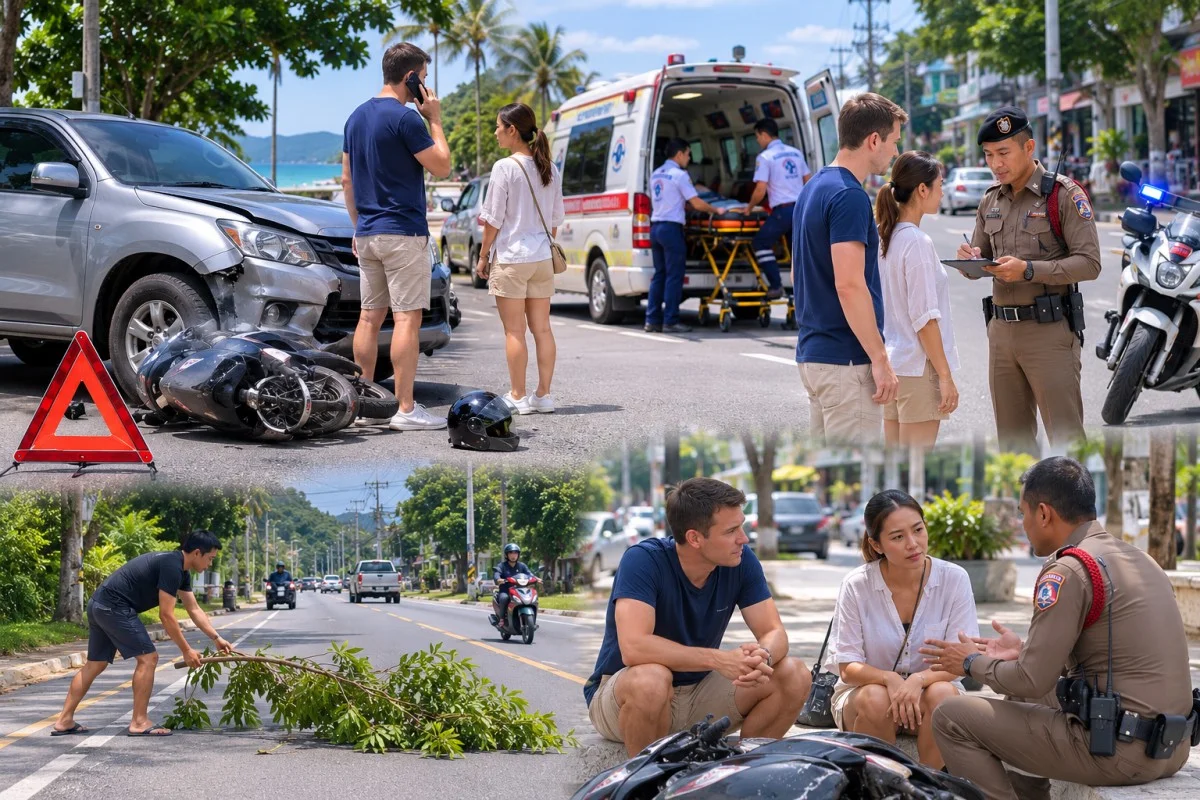
Of course, like anywhere else, the first priority is always safety. If there are no Thai speakers available, then call the Tourist Police 1155, and they will contact emergency medical services if needed. Alternatively, you can call emergency services directly by dialing 1669, but it’s possible the operator won’t speak English. If the vehicles are in a dangerous position on a busy road, turn on hazard lights and, if possible, move to a safer location. In Thailand, if there is an accident or a vehicle blocking the road, it is common practice to place a large branch in the road about 100 meters beforehand to warn oncoming traffic.
Remain calm and cooperative while waiting for authorities to arrive. It’s important to not get angry, start placing blame, or start a confrontation. Generally, in Thai culture, losing your cool is frowned upon, and that kind of behavior will only make the situation worse, especially with the police. Do not argue – if you feel you are being treated unfairly, that is a conversation to have later in private with the police or a lawyer.
If the accident results in nothing more than minor damage, it can sometimes be preferable to avoid getting the police and insurance companies involved. If both parties can agree on a reasonable resolution regarding fault and financial responsibility for damages, avoid the extra cost and bureaucracy by settling it amongst yourselves. However, should mediation and insurance claims become necessary, by all means call the Tourist Police or the regular police by dialing 191. If you call the police, immediately contact your insurance company, and they will send an agent to liaise on your behalf. Never give the police money or sign any paperwork at the scene. Should there be any traffic fines to pay or official paperwork to sign, do this at the police station only and with an insurance company representative present.
Documentation is crucial. The insurance representative will likely handle this, but gather evidence yourself while you’re waiting for them to arrive. If your vehicle has a dash cam, make sure the footage is preserved as many cameras automatically loop to record over previous footage. Take clear photos of the accident scene, including vehicle damage, license plates, road conditions, and any relevant traffic signs. If there are witnesses, politely ask for their contact details. Note any CCTV cameras in the vicinity that may have captured another angle of the accident. This evidence may be extremely helpful when dealing with insurance companies or resolving disputes.
Exchange information with the other party. This should include full names, phone numbers, driver’s license details, and insurance information. If you’re driving a rental vehicle, contact the rental company immediately, and they will explain their protocol for handling the situation and may liaise on your behalf with insurance and police.
Afterward, be sure to follow up promptly. File any required reports, submit insurance claims, and keep copies of all the documents and photos. Staying organized will help ensure a quicker resolution and can help with any further complications.